 Skip to content

Multi-Band Aviation Antenna for GPS, BDS, GLONASS & Galileo
A compact, lightweight four-system multi-frequency Aviation Antenna built for UAVs, surveying and mapping, and vehicle-mounted high-precision positioning. With a high-gain LNA, wide beam and strong out-of-band rejection, it keeps your GNSS receiver locked even in demanding flight environments.
- Supports multi-frequency points of GPS, BDS, GLONASS and Galileo
- Φ90 × 24.6 mm, ≤160 g, reliable structure for airborne installation
- IP67 after assembly; high out-of-band rejection against base-station interference
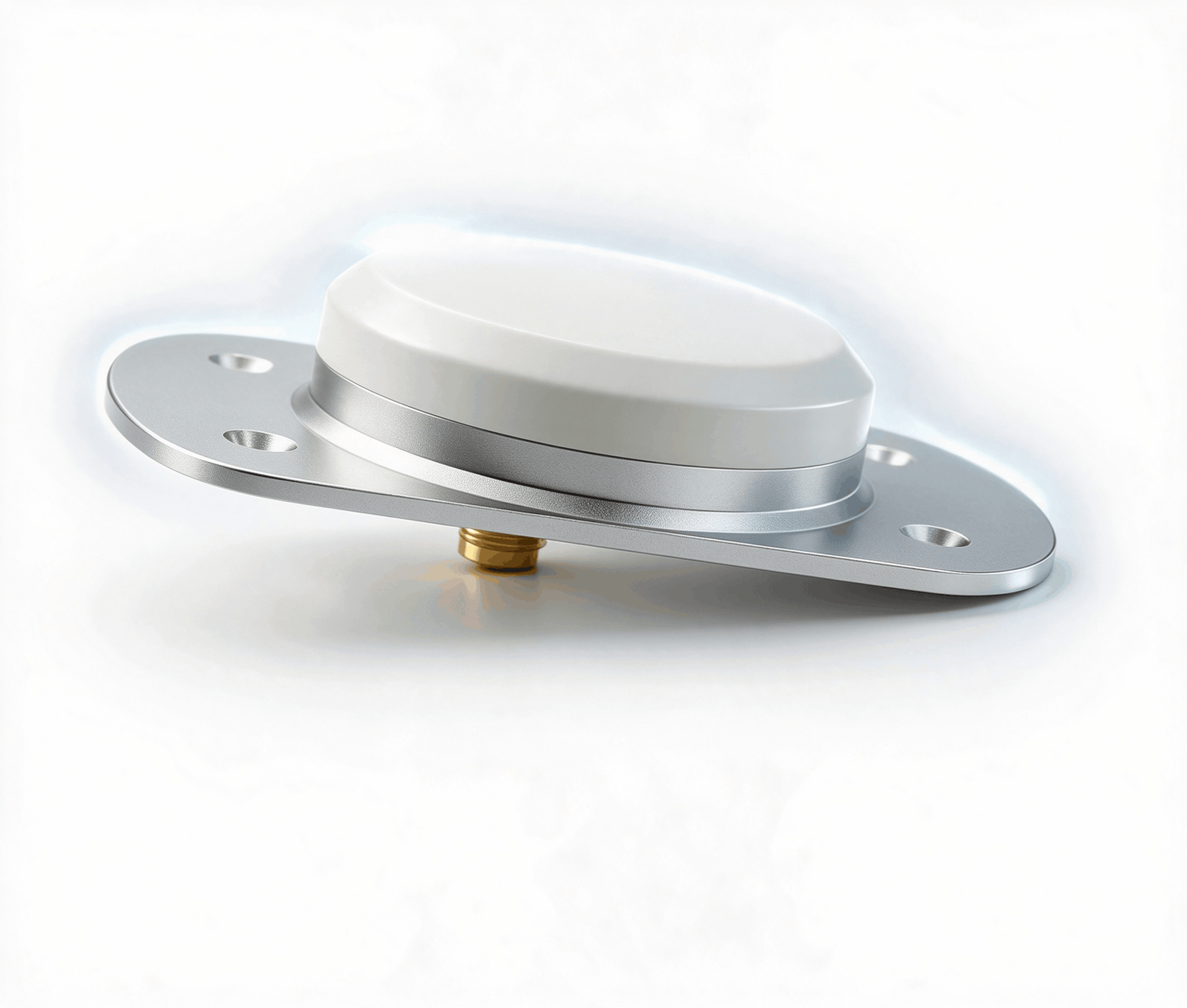
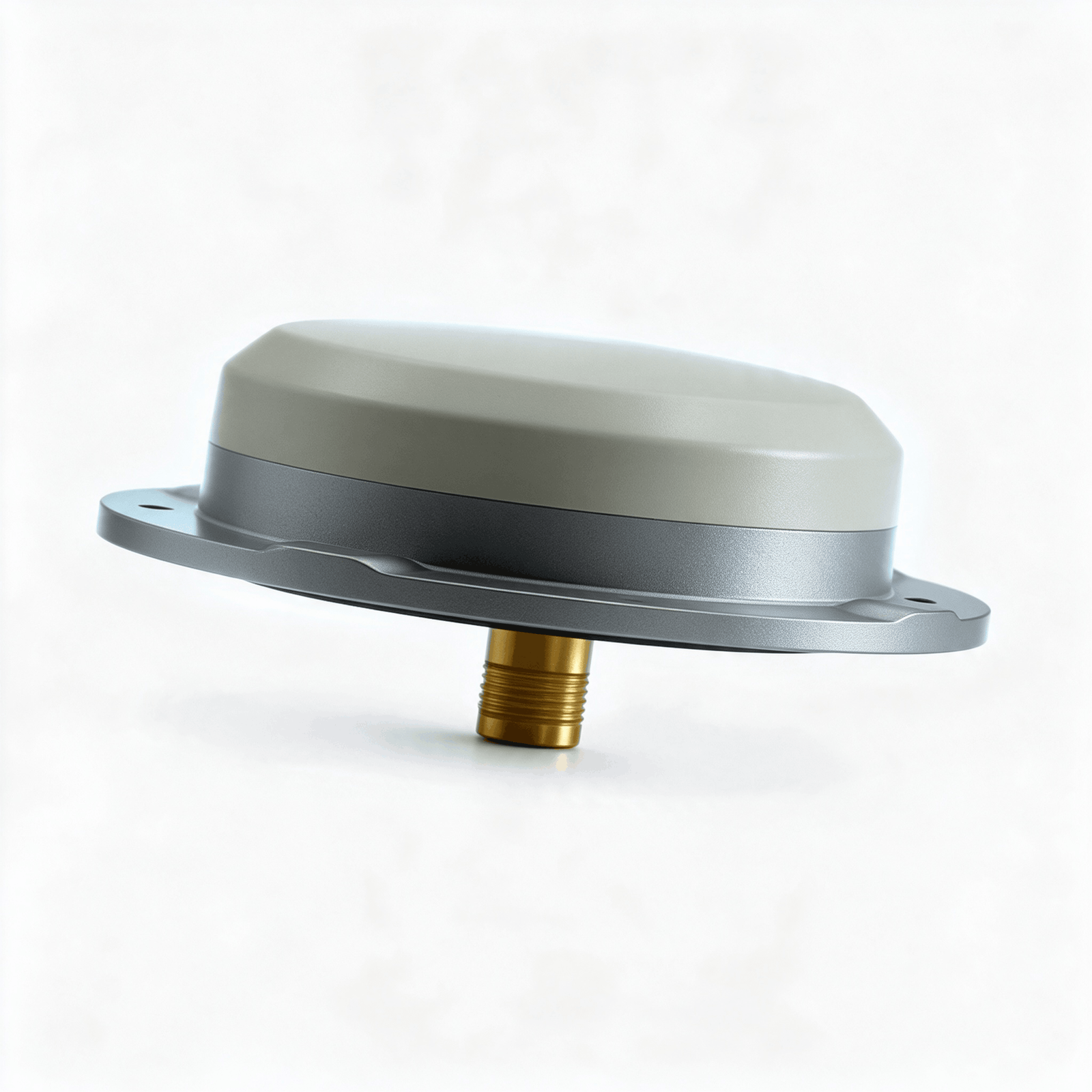
High-Precision Multi-Frequency GNSS Aviation Antenna
This four-system multi-frequency Aviation Antenna covers GPS L1/L2/L5, BDS B1/B2/B3, GLONASS G1/G2/G3 and Galileo E1/E6/E5b, plus L-Band. Its wide operating bandwidth supports true multi-system, multi-frequency operation, including the globally networked B3 band, which greatly improves system stability.
It is widely used in surveying and mapping, high-precision UAVs and vehicle-mounted systems, and is especially suited to UAV applications such as agriculture, aerial photography, telemetry, disaster monitoring, patrol, public security surveillance and power line inspection.
Talk to an Antenna EngineerKey Features of Our Aviation Antenna
Engineered for stable satellite reception on UAVs and other airborne platforms.
Multi-System, Multi-Frequency
Supports GPS, BDS, GLONASS and Galileo multi-frequency points, giving your RTK or PPK receiver more observations and greater positioning stability.
High Gain, Wide Beam
The high-gain, wide-beam antenna element receives low-elevation signals well, so satellites are still tracked normally in environments with severe obstruction.
Wide Operating Bandwidth
Wide bandwidth supports multi-system operation across all key bands, especially the globally networked B3 band, improving overall system stability.
Compact and Lightweight
Φ90 × 24.6 mm and ≤160 g with a reliable structure, ideal for payload-sensitive drones and compact airborne installations.
Rugged IP67 Protection
IP67 after assembly (single antenna IP65) for strong water and impact resistance, improving the reliability of the entire UAV.
High Out-of-Band Rejection
Effectively suppresses interference from communication base stations and other sources, avoiding signal instability near strong RF emitters.
Where This Aviation Antenna Performs
A versatile UAV antenna and high-precision GNSS antenna for professional positioning tasks.
Smart Agriculture
UAVs & Drones
Intelligent Driving
Surveying & Mapping
Aerial Photography
Disaster Monitoring
Power Line Inspection
Patrol & Public Security
Why Choose a Multi-Band Aviation Antenna?
Single-band antennas struggle with multipath, interference and signal loss in flight. A multi-band Aviation Antenna tracks more satellites on more frequencies, so your receiver can resolve ambiguities faster and hold a stable fix during turns, vibration and low-elevation passes.
- Better availability with four constellations on multiple frequencies
- Stable carrier-phase performance with ±3 mm phase center error
- Right-hand circular polarization with axial ratio ≤3 dB
- Strong interference immunity for reliable operation near base stations

Aviation Antenna Technical Specifications
| Item | Specification |
|---|---|
| Frequency range | GPS L1/L2/L5; BDS B1/B2/B3; GLONASS G1/G2/G3; Galileo E1/E6/E5b; L-Band |
| Impedance | 50 Ω |
| Polarization | Right-hand circular polarization (RHCP) |
| Axial ratio | ≤3 dB |
| Horizontal coverage angle | 0°–360° |
| Output VSWR | ≤1.5 |
| Maximum gain | 2.5 dBi |
| Phase center error | ±3 mm |
| Item | Specification |
|---|---|
| Gain | 36 ± 2 dB |
| Noise figure | ≤2 dB |
| Output VSWR | ≤2.0 |
| In-band flatness | ±2 dB |
| Operating voltage | DC 3.3–12 V |
| Operating current | ≤50 mA |
| Item | Specification |
|---|---|
| Antenna dimensions | Φ90 × 24.6 mm (excluding connector) |
| Antenna weight | ≤160 g |
| Mounting method | Four M4 screws |
| Item | Specification |
|---|---|
| Ingress protection rating | IP67 (after assembly); single antenna IP65 |
| Operating temperature | -40°C to +85°C |
| Storage temperature | -55°C to +85°C |
| Humidity | 95% non-condensing |
How to Choose the Right Aviation Antenna
Match the antenna to your platform and receiver before you order.
Confirm Frequencies
Check which GPS, BDS, GLONASS and Galileo bands your receiver or RTK module needs, including B3 and L-Band.
Check Power and LNA
Confirm your receiver can supply DC 3.3–12 V and suits a 36 ± 2 dB LNA gain on your cable length.
Verify Size and Mounting
Allow for Φ90 × 24.6 mm, ≤160 g and four M4 screw mounting holes on your airframe or vehicle roof.
Review the Environment
For rain, dust and vibration, use IP67 assembly and the -40°C to +85°C operating range as your reference.
Plan Interference Control
Near cellular base stations or datalinks, high out-of-band rejection helps keep the receiver stable.
Ask About Customization
Need a specific connector, cable length or OEM branding? Send us your requirements for review.
FAQ About the Aviation Antenna
What is an Aviation Antenna?
An Aviation Antenna is a GNSS antenna designed for airborne platforms such as UAVs. It receives satellite signals from systems such as GPS, BDS, GLONASS and Galileo, and passes them through a low-noise amplifier to the receiver for accurate positioning and navigation.
Which satellite systems and frequencies does it support?
It supports GPS L1/L2/L5, BDS B1/B2/B3, GLONASS G1/G2/G3, Galileo E1/E6/E5b and L-Band.
Can it be used on a UAV or drone?
Yes. With a weight of ≤160 g, a compact Φ90 × 24.6 mm body and IP67 protection after assembly, it is well suited to agricultural drones, aerial photography, power line inspection, patrol and disaster monitoring.
What is the operating voltage of the antenna?
The built-in LNA operates from DC 3.3–12 V with a current of ≤50 mA.
How is the antenna installed?
It is mounted with four M4 screws. Please contact us if you need the mechanical drawing or connector options.
Can the Aviation Antenna be customized for OEM projects?
Yes. Please send us your application, connector, cable length and quantity requirements, and our engineers will review them and reply with a suitable solution.
More GNSS Antenna Solutions
Need a Reliable Aviation Antenna for Your UAV Project?
Tell us your frequency, connector and quantity requirements. Our engineers will recommend the right Aviation Antenna and reply within 24 hours.
Request a Quote Contact Our Engineers